
Agrasen ki Baoli
A 60-metre stepwell sunk into the ground in the middle of Connaught Place — 108 stone steps descending in tightening tiers toward water that's long gone dry. Nobody's certain who built it or when; the name credits the legendary king Agrasen, the visible structure is 14th-century Tughlaq-era rebuild.
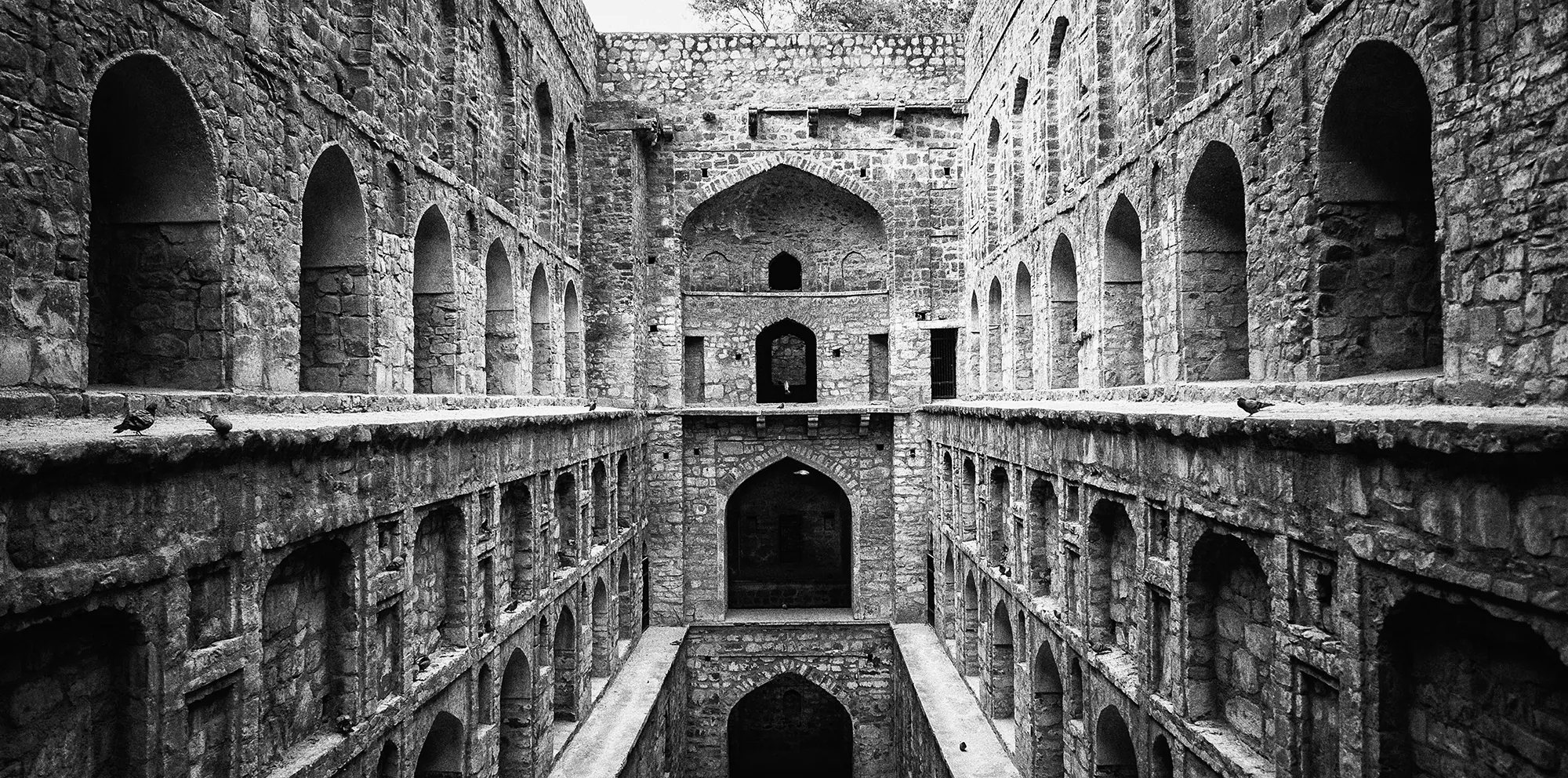
What makes it worth the detour is the disappearing act. One minute you're among the glass towers and honking traffic of central Delhi; a few steps down and the city's noise drops away with the light, the walls close in, and you're standing in cool, echoing 14th-century shade. It photographs beautifully — the receding arches, the geometry of the steps — and it's small enough to see in twenty minutes.
Free entry, open through the day. Go early or late; midday flattens the shadows that make the place. It's also picked up a reputation as "haunted" thanks to a few films and a lot of internet — pay it no mind, or enjoy it, your call.
Safdarjung’s Tomb
The last of the great Mughal garden tombs, built in 1754 for a powerful nobleman — and you can see the empire fading in the stonework. Where Humayun's Tomb is crisp and confident, Safdarjung is softer, more ornate, slightly over-decorated, the work of a dynasty past its peak spending money it no longer quite had. Historians sometimes call it the "last flicker" of Mughal architecture.
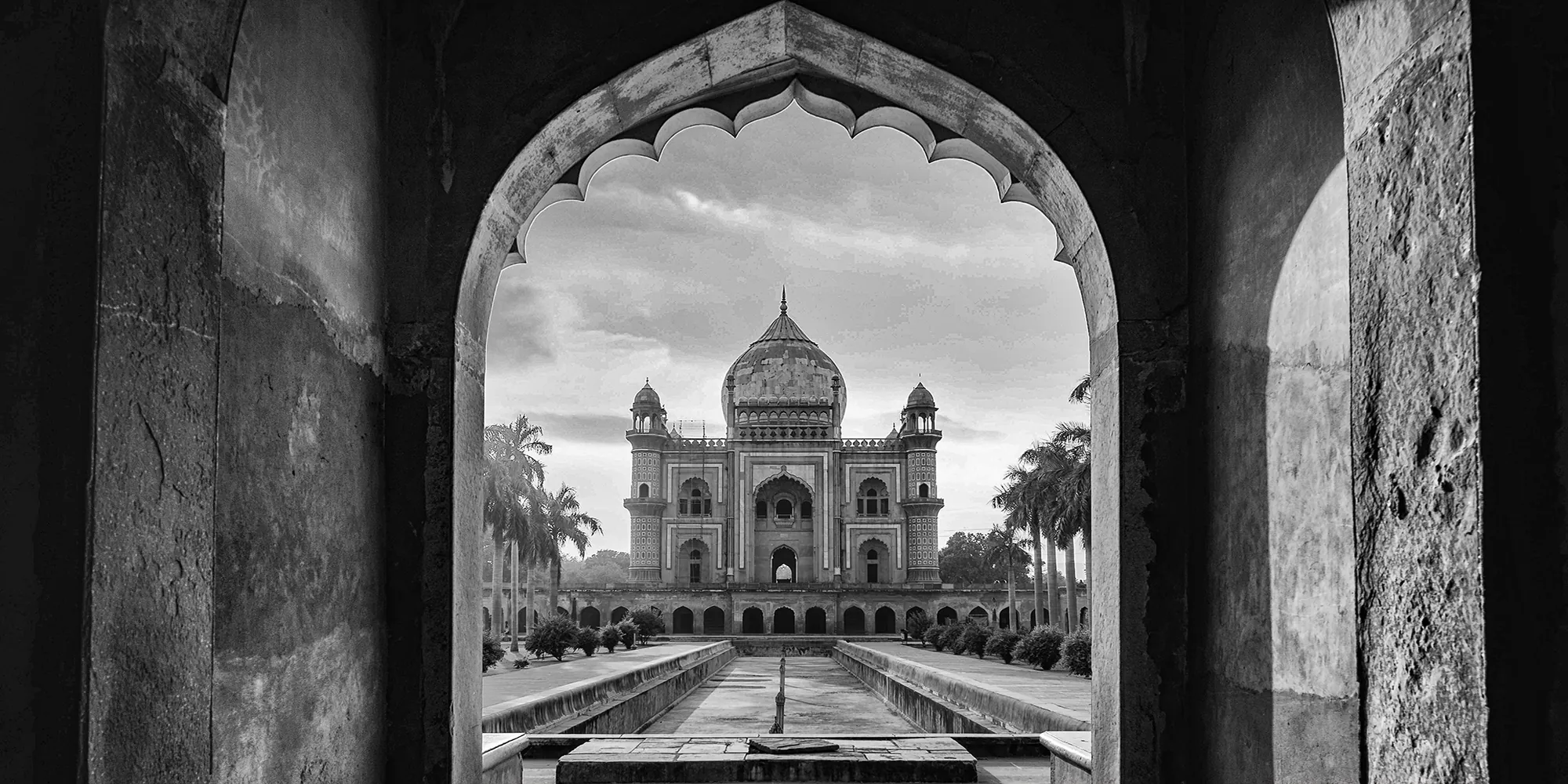
Which is exactly why it's worth it. Same garden-tomb formula as Humayun's — domed mausoleum, four-quartered gardens, water channels — but a fraction of the crowd. You can have the lawns nearly to yourself, climb up into the tomb chamber, and read the whole arc of an empire's decline in one quiet building. A connoisseur's stop, not a headline one.
On Lodhi Road, near the airport approach. Small entry fee (verify, foreign-national rate higher). Pairs naturally with Lodhi Garden a short hop away if you want to make a morning of it.
Mehrauli Archaeological Park
Eight hundred years of Delhi packed into one rambling, half-wild park in Mehrauli (next to the Qutub Minar) — and almost nobody in it. Tombs, mosques, stepwells, a summer palace, and crumbling pavilions scattered across the scrub, spanning from the early sultans right through to the British. This is the only patch of the city continuously occupied for a millennium, and it shows: the ruins sit on top of each other, unlabelled and unbothered.
The appeal is the opposite of a managed monument. There are no queues, no ticket booth, barely any signage — you wander, you stumble onto things, you have a 700-year-old tomb entirely to yourself. Highlights worth finding: the Rajon ki Baoli stepwell, Balban's Tomb, Quli Khan's tomb, and Jamali Kamali.
That last one earns its own paragraph. It's a jewel-box pair: a handsome 16th-century mosque in red sandstone and marble, and beside it a small tomb holding two graves. One belongs to Jamali, a Sufi poet of the era. The other — Kamali — nobody can identify. The names rhyme; the rest is a shrug. Step past the mosque's facade and get inside the tomb, because the ceiling is the reason to come: a tiny chamber lavished with painted and tiled ornament, deep reds and blues, plaster moulding, lines of Jamali's own verse worked into the walls. Fair warning — the tomb is often locked, which turns finding the guard with the key into a small game you may or may not be in the mood to play.
Free, open through the day. Wear real shoes and bring water — it's spread out, uneven, and shadeless in patches. Go with time to get a little lost; that's the whole point. A guide or a map helps, since nothing's marked.
Jantar Mantar
A garden of giant astronomical instruments, built around 1724 by Maharaja Jai Singh II — the same obsessive who built the larger one in Jaipur. No telescopes, no lenses: just vast geometric structures of masonry, each one a tool for tracking the sun, stars, and time with the naked eye. The big staircase-to-nowhere is a sundial; the others measure things you'll need the plaques to understand.
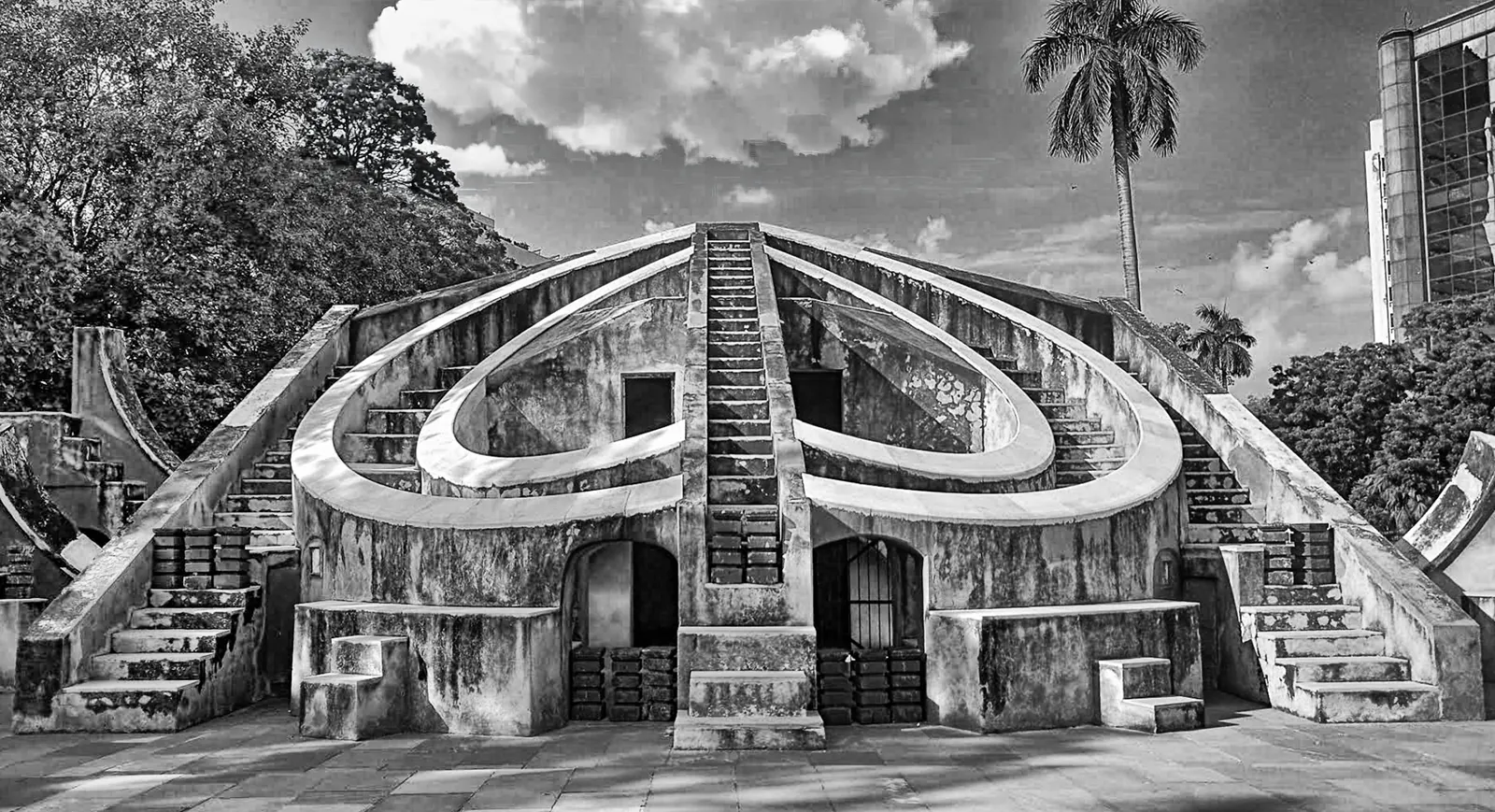
It's a sculptural experience — less a monument to look at than a set of instruments scaled up to the size of buildings, walked through and around. Worth it if you like the idea of 18th-century astronomers doing precision science with nothing but stone and shadow. Genuinely absorbing for an hour, especially once you work out what each structure is actually measuring.
Central, near Connaught Place. Small entry fee (verify, foreign-national rate higher). The instruments make more sense with a guide or a good read beforehand — without context it's handsome but cryptic.
