
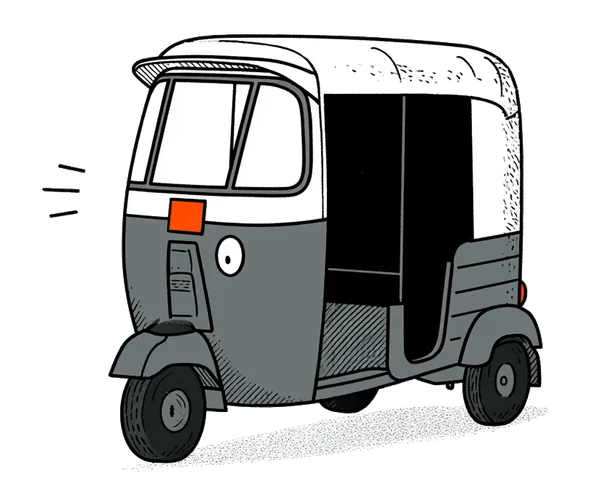
You may know them as tuk-tuks. Delhi knows them as auto-rickshaws — three-wheeled, two-stroke chariots painted in municipal yellow and green, buzzing through traffic with the nimbleness of a wasp at a picnic.
They are small, loud, and piloted by men who navigate Delhi’s roads with a spatial awareness that would make a fighter pilot weep.
The easy way: book one through Uber or Ola. No negotiation, GPS-tracked, fare settled by algorithm rather than argument.
The adventurous way: hail one off the street. If you choose this path — and it is a choice, in the way that bungee-jumping is a choice — the single most important rule is this: agree on the price before your backside touches the seat. This is non-negotiable, as sacred as grace before dinner.
Most auto drivers will laugh at the meter and quote a flat fare instead. If you cannot speak Hindi, that fare will be two to three times what a local would pay, delivered with a straight face and the unshakeable conviction that you were born yesterday.
Counter at fifty to sixty percent of their opening number. When the driver shakes his head — and he will — simply walk away. This is not a negotiation breakdown; it is the negotiation itself.
Delhi is a city where another auto-rickshaw will materialise within thirty seconds, the way buses supposedly do in London but never actually do.
A useful hack: check the Uber fare estimate on your phone first, then show it to the driver. “It says ₹100 on Uber. I’ll give you ₹150.” He may still refuse, but at least you both know the real number, and the theatre can proceed from a place of mutual honesty.